
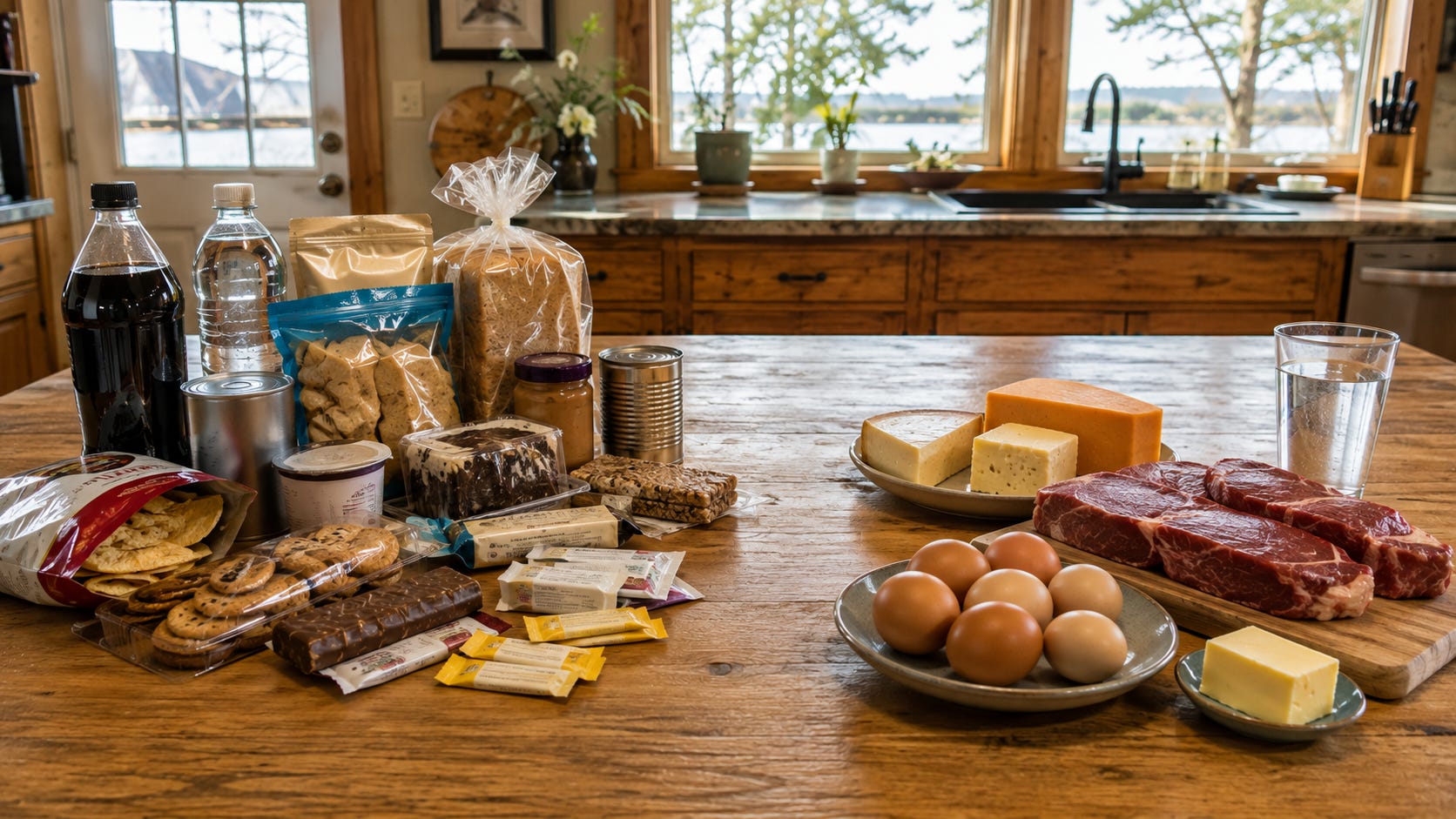
When I decided to change the way I ate, I could have started looking for replacements.
Diet soda instead of soda.
Sugar-free desserts instead of desserts.
Low-carb versions of the foods I was trying to stop eating.
Something sweet without the sugar.
Something crunchy without the carbs.
Something that tasted exactly like the old thing without doing what the old thing did.
That’s pretty much how we’re taught to change.
Don’t change what you want.
Find a substitute.
I think we make this much harder than it needs to be.
Nineteen years ago, I was 53 years old, 98 pounds heavier than I am today, and dealing with type 2 diabetes.
I didn’t need a better version of the food that helped get me there.
I needed to change what I ate.
So I did.
Not overnight. Not perfectly. And certainly not because I possessed some superhuman willpower.
My eating changed.
Then something interesting happened.
What I wanted changed too.
That’s the part we don’t talk about enough.
We act as if our tastes are permanent.
“I could never give up soda.”
“I have to have something sweet after dinner.”
“I can’t drink that without sweetener.”
Maybe.
Or maybe you’ve simply practiced wanting it for a very long time.
We forget that works both ways.
Practice eating differently long enough and your idea of what tastes good can change.
I don’t spend my days longing for the foods I used to eat.
I’m not sitting over a steak thinking, Boy, if only somebody could turn this thing into a donut. 😂
I like the way I eat.
That matters because living healthy gets a whole lot easier when you stop feeling like you’re constantly sacrificing something.
A recent review from researchers at Tufts gives us another reason to question our obsession with substitutes.
They looked at 21 randomized clinical trials involving non-nutritive sweeteners. Compared with water or placebo, the researchers found concerning signals involving fasting insulin, HbA1c, and insulin sensitivity.
That doesn’t mean one packet of sweetener is going to ruin your health.
It doesn’t mean sugar is suddenly good for you either.
It means the clever replacement may not always be as clever as we thought.
And I think there’s a bigger lesson hiding there.
We spend enormous amounts of time trying to engineer our way around changing our habits.
The food industry is happy to help.
Take almost anything you’ve decided not to eat and somebody will sell you a version with a different label.
Sugar-free.
Low-fat.
Low-carb.
Keto.
High-protein.
Zero-calorie.
Sometimes those products can be useful.
But before you go hunting for the replacement, there’s another possibility worth considering.
Maybe you don’t need one.
You can learn to drink water.
You can learn that every meal doesn’t have to end with something sweet.
You can discover that hunger isn’t an emergency.
You can eat simple food and actually enjoy it.
And given enough time, the thing you once believed you could never live without may become something you rarely think about.
That’s what happened to me.
I didn’t spend nineteen years winning a daily battle against food.
That sounds exhausting.
I changed what I practiced until eventually it stopped feeling like a battle.
So if you’re trying to change something about the way you eat, don’t automatically ask:
What can I replace this with?
Every once in a while, try a different answer.
Nothing.
You might be surprised how little you miss it.