
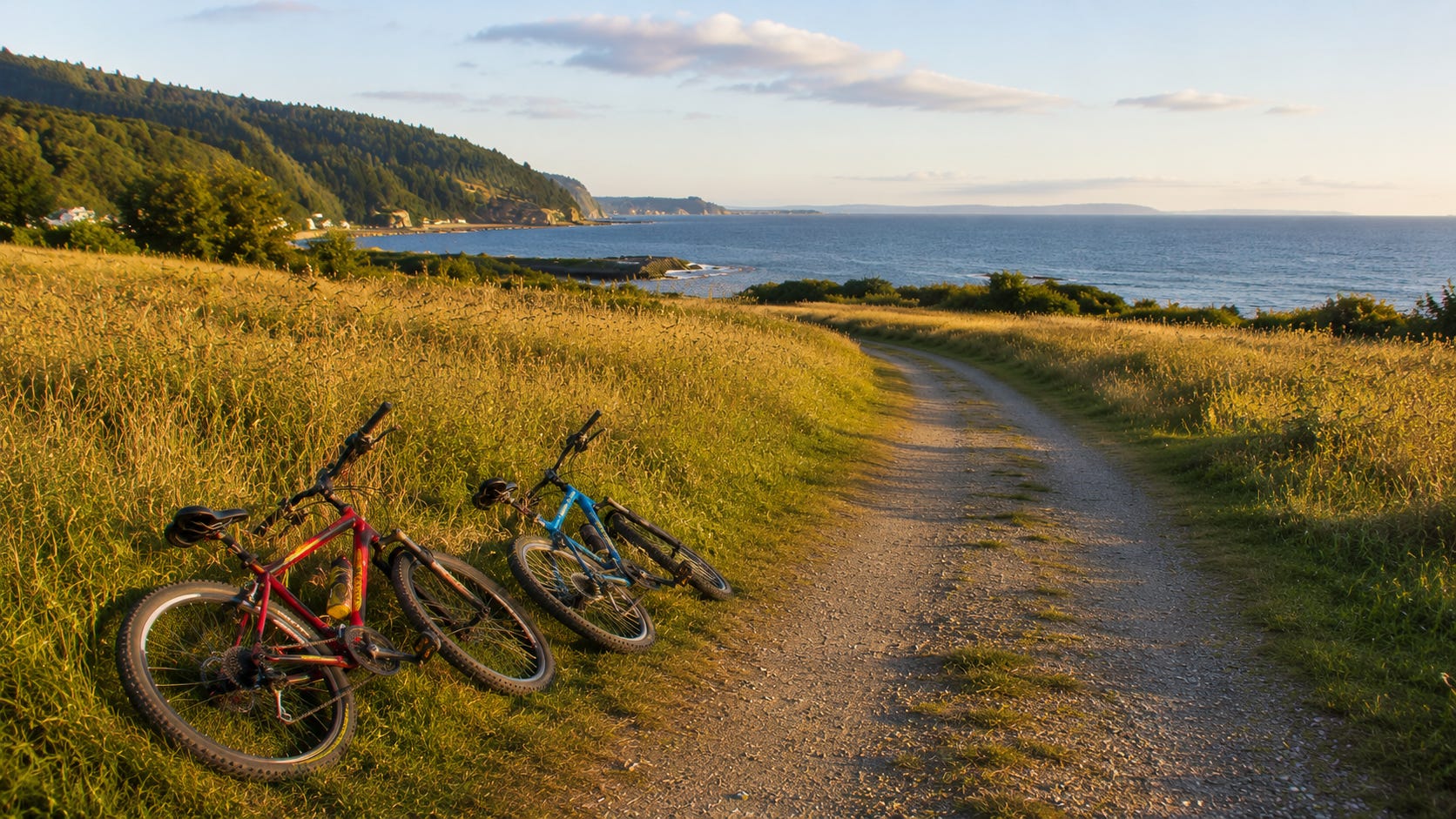
When I was a kid, summer lasted forever.
Seriously.
The last day of school arrived and there was this enormous stretch of life between June and September.
You didn’t measure it in weeks.
You measured it in bike rides and scraped knees and how long you could stay outside before somebody’s mother started yelling your name.
September might as well have been three years away.
Now?
I swear I put my shorts on in June and somebody starts selling pumpkins.
What the hell happened?
I’ve been thinking about this lately because the older I get, the faster time seems to move.
I’m 72 now.
A week can disappear before I feel like I’ve properly introduced myself to Monday.
Months are worse.
Peggy and I will be driving somewhere and one of us will say, “Wasn’t it just Christmas?”
Yep.
And apparently it’s August.
I know there’s some psychology behind this.
Part of it may simply be proportion. When you’re ten, one year is a tenth of your entire life. At 72, it’s a much smaller piece of the pie.
But I think there’s something else happening too.
We stop having as many firsts.
Think about childhood.
First bike.
First day at a new school.
First sleepover.
First time swimming in the ocean.
First crush.
First time you wandered farther from home than you were probably supposed to.
Sorry, Mom.
Everything was worth noticing because so much of it hadn’t happened before.
Then we grow up.
We create routines.
And routines are useful.
I like mine.
I teach classes. I work. Peggy and I eat pretty simply. We protect our weekends. We have places we love to walk and roads we enjoy driving.
I don’t need excitement every fifteen minutes to feel alive.
In fact, that sounds exhausting.
But routine has an interesting side effect.
Your brain gets very good at not paying attention.
You’ve driven this road before.
You’ve eaten this meal before.
You’ve walked this trail before.
You’ve watched another Tuesday become Wednesday.
Nothing unusual here.
Keep moving.
And suddenly it’s Christmas again.
Maybe that’s part of why those childhood summers felt so long.
We were there for them.
Not practicing mindfulness.
God help us, nobody told a ten-year-old in 1964 to practice mindfulness. 😂
We were just paying attention because the world was interesting.
I still get glimpses of that now.
Peggy and I take our weekend drives and walks pretty seriously.
Not serious like we’re training for something.
They’re our us time.
We’ll drive somewhere because we’ve never been down that road.
We’ll stop because there’s an eagle sitting in a tree.
We’ll walk out to the point in Ilwaco and discover two otters having dinner.
We’ll stand around watching pelicans surf.
Sometimes we’ll sit somewhere for twenty minutes and do absolutely nothing useful.
Those moments feel different.
They stick.
I can remember the otters.
I can remember the nine eagles we once saw.
I can remember sitting high above the ocean at Cape Disappointment with Peggy beside me.
And yet I couldn’t tell you much about some random Wednesday three weeks ago.
It disappeared.
That makes me wonder whether we’re asking the wrong question about time.
We say:
How do I slow down time?
We can’t.
The clock doesn’t care.
Sixty seconds is still sixty seconds whether you’re six or 72.
Maybe the better question is:
How much of my time am I actually noticing?
Because perhaps a life doesn’t feel long simply because it contains a lot of days.
Maybe it feels long because it contains a lot of moments we were actually there for.
That doesn’t mean we need bigger adventures.
I’m becoming less convinced that bigger is the answer to much of anything.
You don’t need to fly to Italy every month.
You don’t need a bucket list with 147 items.
You don’t need to turn your life into an Instagram reel.
Maybe you just need to occasionally interrupt the automatic part of your life.
Take the road you’ve never taken.
Walk somewhere different.
Sit outside for dinner.
Call someone you haven’t talked with lately.
Watch the damn sunset instead of photographing it.
Stop when you see the otters.
Do something that makes your brain say:
Huh. This is different.
Because different gets noticed.
And what gets noticed has a better chance of being remembered.
I’m not trying to make my remaining years pass more slowly.
I don’t think that’s possible.
But I would like to lose fewer of them to autopilot.
Maybe that’s one of the real challenges of getting older.
Not squeezing more into our lives.
Not chasing youth.
Not desperately collecting experiences because we’re afraid the clock is running.
Just being awake for the life that’s already happening.
Those childhood summers weren’t special because nothing ever ended.
They ended every year.
Maybe they felt endless because we hadn’t yet learned how to hurry through them.
Perhaps living well includes occasionally looking up from the clock.
And noticing that summer is still here.
Here’s where we’re going to do something different with these Sunday articles.
I’m not going to give you another thousand words about time.
You’ve already got the idea.
Let’s see what happens when you live it.
For the next seven days, I want you to create three moments that interrupt your normal routine.
That’s it.
Don’t make this another damn self-improvement program.
You don’t need a spreadsheet.
You don’t need to track your novelty score. 😂
And you certainly don’t need to spend money.
Just three small departures from autopilot.
Take a different road home.
Walk somewhere you’ve never walked.
Eat outside.
Get up early enough to watch the morning arrive.
Sit beside some water.
Go into the little shop you’ve driven past for five years.
Call somebody.
Turn off the television and sit outside until it gets dark.
Stop somewhere you’d normally drive past.
It doesn’t matter what you choose.
But there’s one rule:
Be there for it.
Don’t immediately reach for your phone.
Don’t turn it into content.
Don’t worry about whether you’re doing it correctly.
Look around.
Listen.
Notice who’s with you.
Notice what the air feels like.
Notice something you wouldn’t have noticed if you’d stayed on autopilot.
Then, at the end of the week, ask yourself:
Does this week feel different from most weeks?
Can you remember those three moments clearly?
Did one surprise you?
Did you discover somewhere you want to return?
Did you notice something that’s been around you for years?
And perhaps the biggest question:
What have you been hurrying past?
I don’t know what you’ll discover.
That’s why we’re doing the experiment.
You don’t need to make every day extraordinary.
Ordinary is pretty damn good when you’re actually there for it.
So sometime this week, interrupt the routine.
Look around.
Stay awhile.
Let’s see if we can make seven days feel like seven days again.