
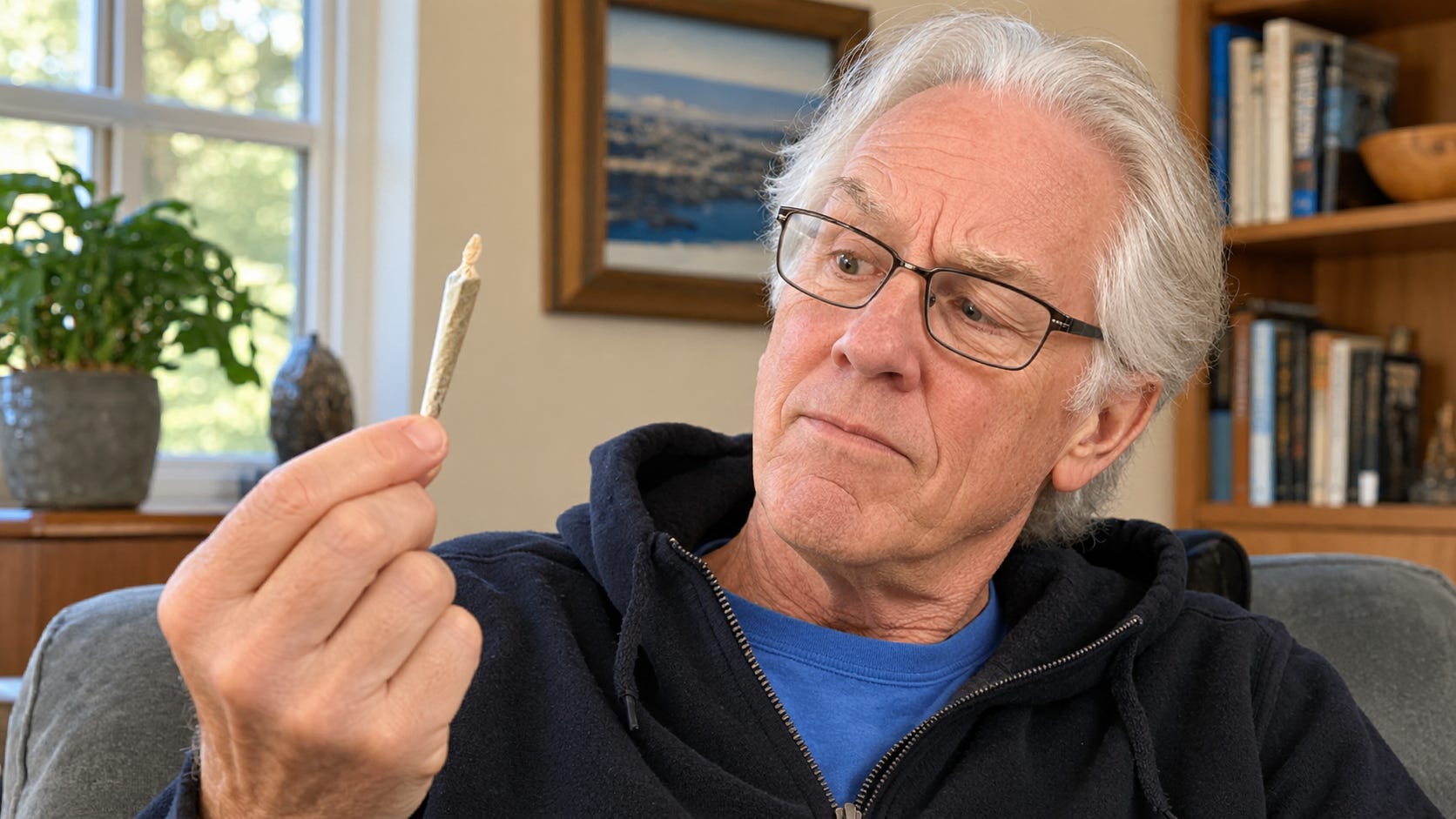
I’ve had a pretty long relationship with marijuana.
I smoked it in college, and on and off through the years. My good buddy Lou was a diehard marijuana user, and whenever I went over to his house, I’d usually partake.
So I’m not coming at this as somebody who’s never tried the stuff.
I actually enjoyed it for years.
Eventually I tried gummies, too. And I enjoyed those. Although looking back, I sometimes wonder how much of that enjoyment was nostalgia for my younger days.
Or maybe I just liked the sugar since I eat very little…
Peggy tried marijuana a few times over the years, but it never really did anything for her. She wasn’t a regular user.
Now, bakery? …That’s an entirely different story when it comes to Ms Peg.
But we’re talking about marijuana today.
For a while, I thought cannabis helped me sleep. Maybe it did. But I also noticed that the next morning I didn’t always feel quite as mentally sharp as I wanted to.
Nothing dramatic. Just a little off.
And I started wondering whether the benefits were worth it.
I eventually stopped using it, probably seven or eight years ago.
I haven’t missed it.
Lately I’ve been reading more about cannabis, especially how many people are using it regularly and how it’s being marketed.
And something about the whole conversation bothers me.
Marijuana is legal in a lot of places now. You can buy it in all sorts of forms, with products marketed for relaxation, better sleep, pain relief, and just about anything else you might want.
I’m not arguing that it should be illegal.
But when did we start confusing permission with safety?
Alcohol is legal, too. We’ve had a pretty long relationship with that stuff, and we know it can do some serious damage.
Legal doesn’t mean harmless.
And cannabis isn’t harmless, either.
Research has found that regular, heavy cannabis use can lead to dependence and problems with attention and memory. Cannabis use disorder is real, and studies continue to raise questions about what frequent use does to the brain.
That doesn’t mean everybody who enjoys a gummy is damaging their brain. And it doesn’t mean cannabis can’t provide genuine relief for some people.
But it does mean there are questions worth asking.
I keep coming back to my own experience.
I enjoyed it. I thought it helped me sleep. But was I actually better off the next day?
For me, the answer wasn’t convincing enough to keep using it.
And I wonder how often we ask ourselves that question about things we’ve made part of our routines.
Not just cannabis. Alcohol, too. Or any number of things we keep doing because we enjoy them, because they’re familiar, or because everybody else seems to be doing them.
I’m not interested in telling people what they can or can’t put in their bodies.
But I am interested in what happens when something becomes so socially acceptable that we stop questioning it.
We’ve gotten pretty enthusiastic about giving people permission.
I wonder if we’ve gotten equally enthusiastic about asking what that permission might be costing us.
David is right about me and cannabis. I learned early in my 20s I couldn't be in the same house where it was being smoked as my breathing would become even more challenged than it already was. So smoking was never an option. Tried various edibles decades later in the hopes of better sleep and relief from sciatic pain. Not only did it not work but it left a horrible metallic aftertaste and I felt like a truck ran over me. Resistance stretching was the answer to my sciatic pain and was the beginning of our path to RiversZen. If cannabis can provide you relief without the evil side effects I experienced, it can be a great part of your healing protocol. As with anything we ingest, massage, or inhale, we want to do it mindfully.
Smoking damages lung and vascular tissue.
Think Robin Williams in
Mrs Doubtfire- no pudgy don’t smoke!