
In 2007, I was facing seven surgeries.
Both feet. My right knee. Lower back. Shoulder. A possible hip surgery.
Seven procedures. Seven recoveries. Seven opportunities to spend a considerable amount of time wondering whether I’d ever move comfortably again.
I was 53 years old, and I wasn’t particularly excited about the future being laid out for me.
Now, before somebody gets the wrong idea, I’m not against surgery. If I get hit by a truck tomorrow, please take me to a hospital. Preferably a good one.
But I wasn’t dealing with a truck.
I was dealing with years of accumulated problems. Pain, stiffness, injuries, and a body that seemed to be getting less cooperative by the month.
The proposed solution was to start operating on various pieces of it.
I had a different question.
What if the pieces weren’t the whole problem?
Something different
Around that time, I discovered resistance stretching.
Not the usual stretching where you pull on something, hold it for thirty seconds, and hope it eventually gives up.
This was different.
You contracted the muscle while lengthening it. Strengthening and stretching at the same time. Working with resistance through a range of motion instead of simply trying to become more flexible.
It made sense to me.
More importantly, when I started doing it, things began to change.
My feet improved. My knee improved. My back became manageable. My shoulder stopped being such a problem.
And somewhere along the way, the surgeries stopped looking quite so inevitable.
I canceled them.
All seven.
That was nineteen years ago.
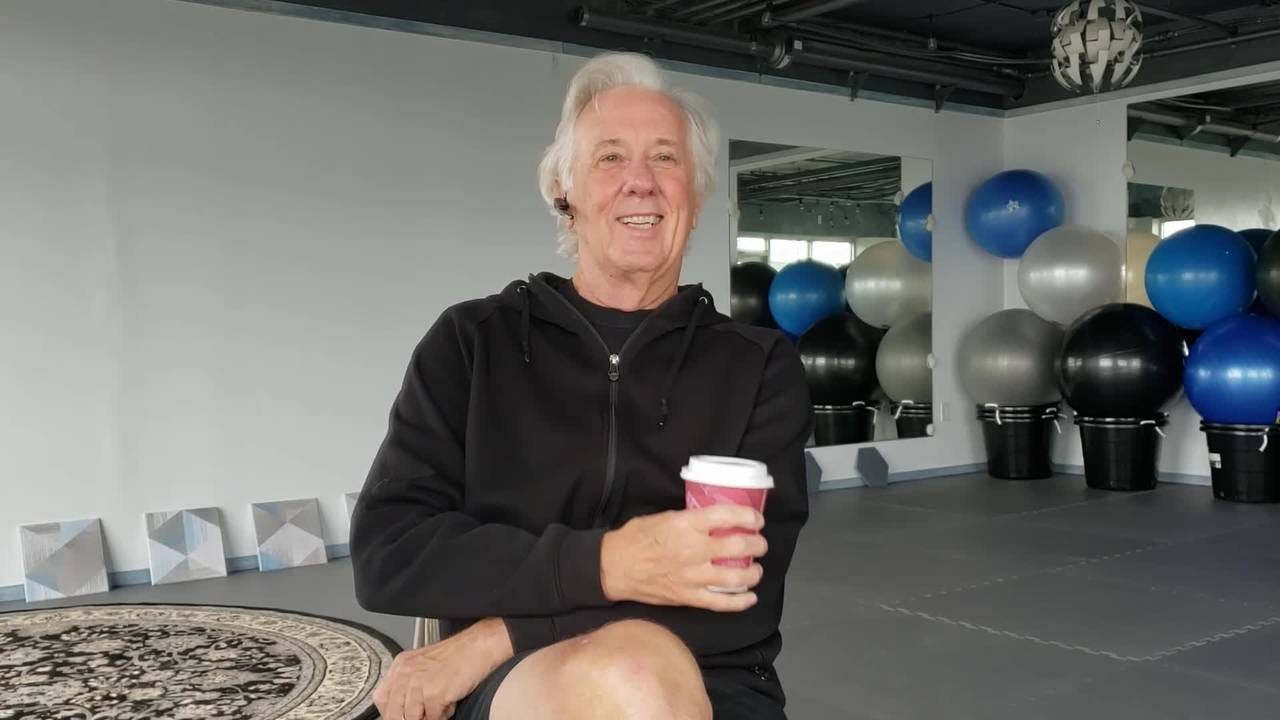
Today I teach movement classes six days a week. I move better than I did at fifty, and I have no intention of slowing down just because somebody thinks I should.
That doesn’t mean every joint is perfect. It means I’m living a life I once thought might be slipping away.
And I still wonder what would have happened if I’d simply followed the original plan.
What about the rest of the body?
Here’s where I have a problem with the way we approach chronic pain and movement problems.
We’re very good at looking at the damaged part.
An X-ray shows deterioration. An MRI shows a disc problem. A knee hurts, so we examine the knee.
Fair enough.
But what about everything that makes that knee work?
The muscles above it. The muscles below it. The way the hip moves. The way the ankle moves. The strength, coordination, and movement patterns that have developed over decades.
Those things matter.
I’ve spent years watching what happens when people begin changing them.
Sometimes the difference is remarkable.
A student who needed a cane no longer needs it. Someone who dreaded stairs starts taking them without thinking about it. A person who couldn’t comfortably get down on the floor discovers they can.
And yes, sometimes a joint that was described as bone-on-bone begins feeling considerably better.
That doesn’t mean the cartilage magically grew back. It means the person is moving differently, functioning better, and experiencing less pain.
I think that’s worth investigating before assuming an operation is the only possible answer.
Nineteen years later
I have nothing against surgeons. There are situations where surgery is absolutely the right choice, and I’m glad we have people who know how to do it.
What bothers me is the possibility that some people are being sent down that road without ever discovering what else their bodies might be capable of.
I know what happened to me.
I was looking at seven surgeries, and I found another way.
It wasn’t overnight. It took work, experimentation, and a willingness to question what I’d been told.
And resistance stretching wasn’t the only thing I changed. I also changed how I ate, lost weight, reversed my type 2 diabetes, and started paying attention to how the different parts of my body worked together.
All of those changes became part of a different life.
Eventually, Peggy and I built RiversZen around much of what we’d learned.
We didn’t start teaching because we’d found a magical exercise that fixed everybody.
We started teaching because we’d discovered that people often have more possibilities than they realize.
Sometimes those possibilities are small. Being able to turn your head comfortably. Getting up from the floor. Walking down the stairs without worrying about your knee.
Sometimes they’re enormous.
Like canceling seven surgeries.
I still have all the original parts
That’s something I enjoy thinking about.
Nineteen years ago, I was looking at a future that involved operating on one part of my body after another.
Today, I’m still teaching, moving, stretching, exploring, and generally making a nuisance of myself.
With all the original equipment.
I’m not promising that everyone can avoid surgery by doing what I did.
But I am suggesting that when somebody tells you a particular outcome is inevitable, it might be worth asking a few more questions.
What else could be contributing to the problem? What haven’t we tried? What might change if we approached the whole body instead of only the painful part?
Those questions changed my life.
And nineteen years later, I’m awfully glad I asked them.