
Remember when the world shut down in 2020?
Roads emptied. People stayed home. Places that normally had plenty of human activity suddenly got quiet.
And somewhere out there, the animals were going about their business.
I remember seeing stories about wildlife reclaiming the world while humans were locked indoors. It was a wonderful idea. Get people out of the way and nature comes roaring back.
But apparently, nobody told the wolves.
Researchers recently looked at GPS tracking data from 4,581 birds and mammals representing 37 species across the United States. They compared where those animals went with changes in human activity during the pandemic.
And the results weren’t nearly as simple as you might expect.
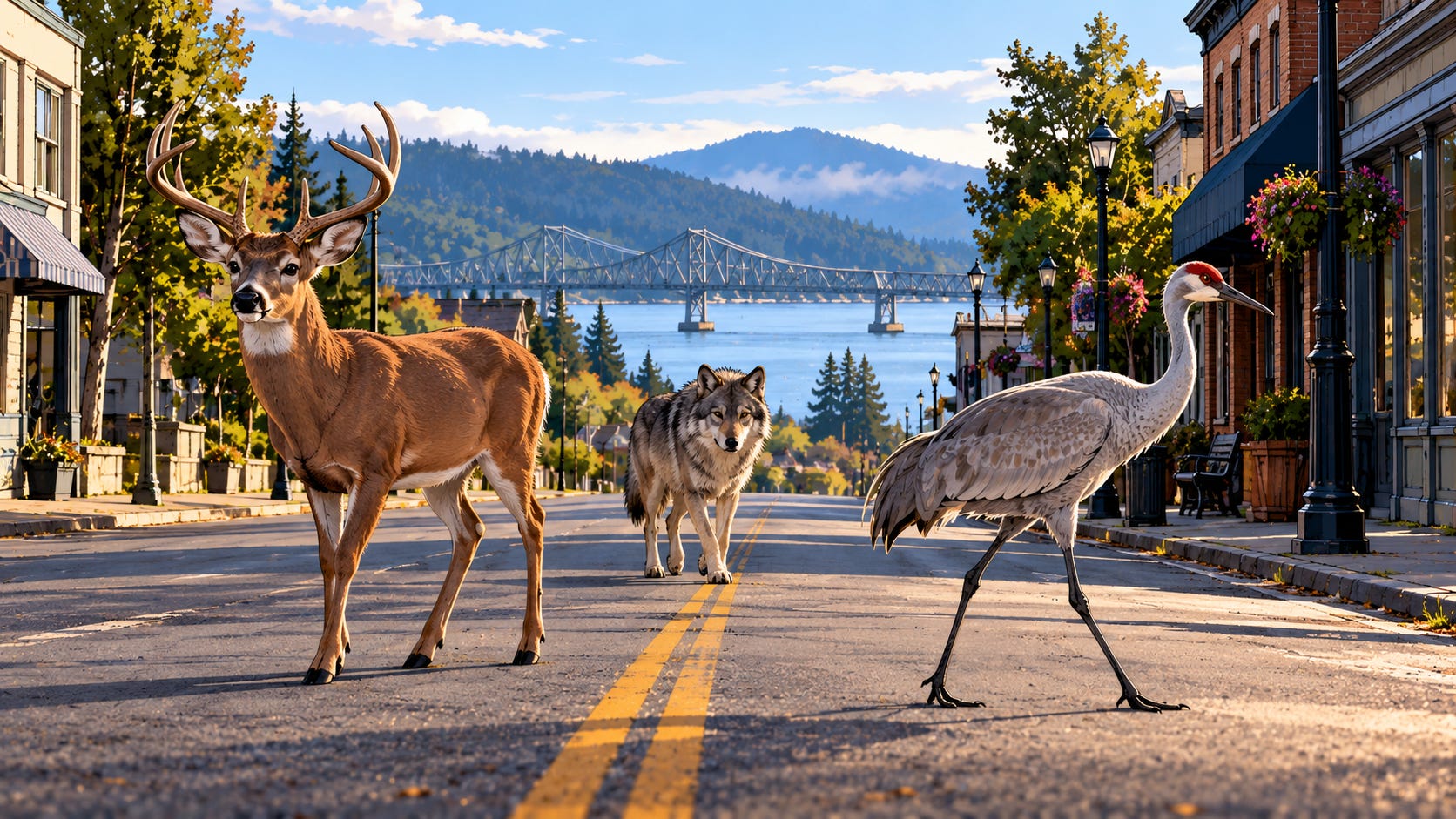
Take white-tailed deer.
In more developed landscapes, deer tended to use a wider variety of environments. But when more people were actually present, their range of environmental conditions narrowed.
Sandhill cranes showed the opposite pattern.
And gray wolves? Their use of different environments actually expanded with greater human presence.
Now, I don’t know what the wolves were thinking. Maybe spreading out helped them avoid people. Maybe something else was going on.
The researchers couldn’t tell us that.
What they could tell us was that the physical things we’ve built—roads, buildings, towns—don’t necessarily affect wildlife the same way our actual presence does.
And different animals respond differently.
That makes sense when you think about it. A deer isn’t a crane. A crane isn’t a wolf. And none of them received a copy of the official pandemic instructions.
I spend a fair amount of time watching birds and other critters around here. Eagles, otters, whatever happens to show up.
I’ve always enjoyed wondering what they’re up to.
Now I’m wondering something else.
What do they think we’re up to?