The Day We Just Stopped
Nobody told us to quit drinking.
There was no intervention. No rock bottom. No morning we woke up and made a solemn resolution. No dramatic conversation between Peggy and me about what alcohol was doing to our lives.
One day we just noticed we had stopped.
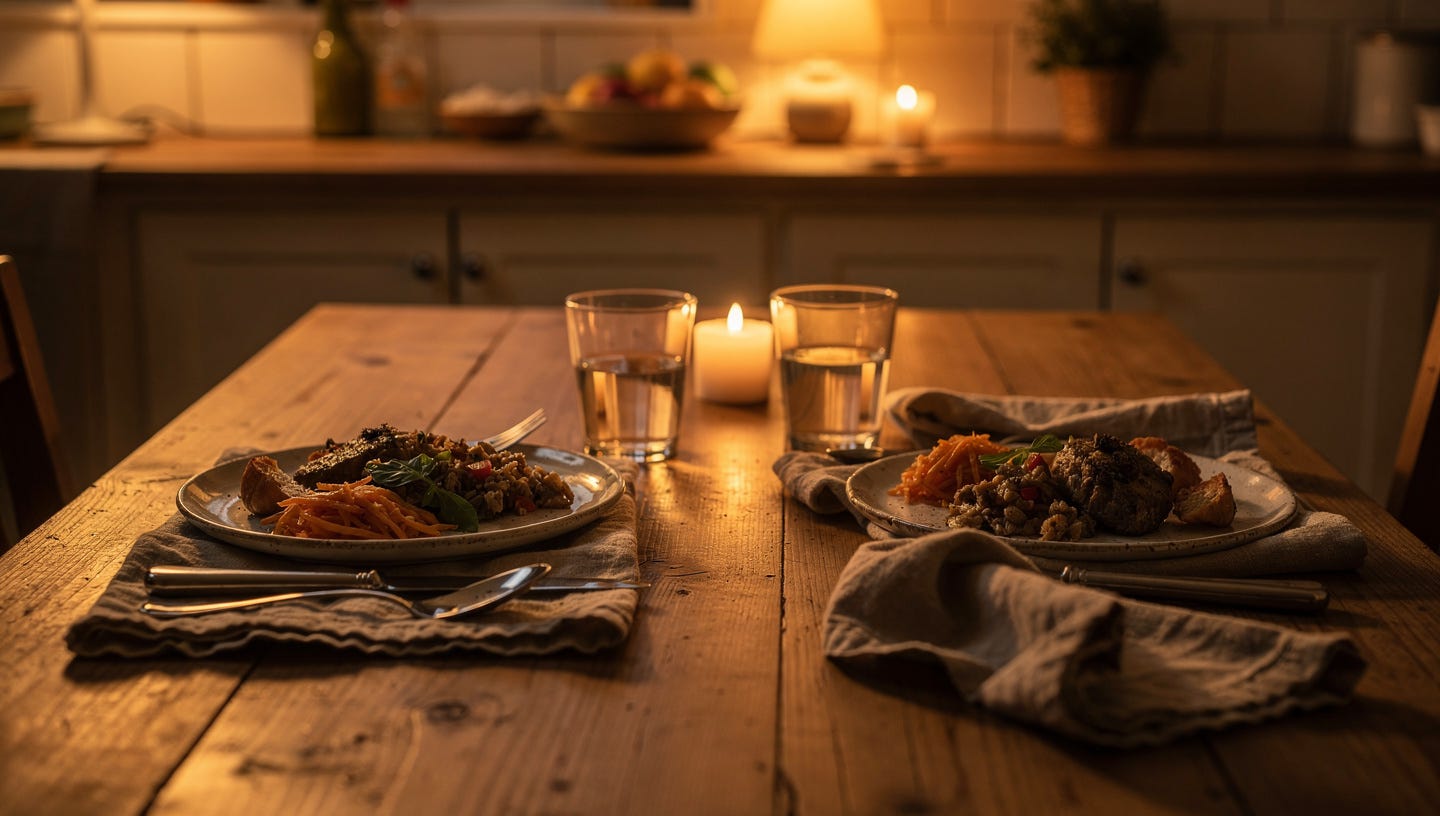
A glass of wine with dinner had been part of our life for years. I enjoyed a scotch. Peggy liked her wine. Nothing excessive. Nothing that looked like a problem from the outside. Just the quiet background presence of alcohol that most people over 50 would recognize immediately.
And then somewhere in the process of rebuilding our health — the daily movement, the real food, the sleep we started protecting like it mattered — the craving just disappeared. Not dramatically. Not all at once. It faded the way a habit fades when your body no longer needs what it was getting from it.
We did not decide to quit. Our bodies decided for us.
I have thought about that a lot since. Because what it tells me is something the wellness industry will never put on a label and the alcohol industry will spend billions making sure you never hear.
Your body does not actually want alcohol. It wants what alcohol pretends to offer. Relaxation. Relief. A boundary between the stress of the day and the peace of the evening. When you build a body and a life that provides those things directly — through movement, through real food, through sleep that actually restores — the alcohol becomes unnecessary. Not forbidden. Not resisted. Just unnecessary.
That is a completely different relationship with drinking than the one most people have.
Most people manage their drinking. They set limits. They take breaks. They do dry January and feel virtuous and go back to the glass of wine on February first because nothing underneath actually changed. The craving was still there. They just white-knuckled their way past it for thirty days.
We did not manage anything. We just got healthy enough that the craving stopped showing up.
Here is what the research actually says about alcohol that the wine-with-dinner crowd does not want to hear. There is no safe level. The heart healthy red wine story that dominated health headlines for two decades has been largely dismantled. The studies it was based on had serious flaws. People who drink moderately tend to have other healthy habits that explained the outcomes, not the wine. When researchers controlled for those factors the cardiovascular benefit of alcohol disappeared.
What did not disappear was the risk. Alcohol is a Group 1 carcinogen. The same category as tobacco and asbestos. It raises the risk of cancers of the mouth, throat, esophagus, liver, colon, and breast. It disrupts sleep architecture even in small amounts — you may fall asleep faster but you will not sleep as deeply or restore as fully. It raises cortisol. It impairs the body’s ability to recover from exercise. It taxes the liver with every single drink regardless of how moderate the drinking is.
None of that makes you a bad person for having a glass of wine. It makes you someone who deserves accurate information instead of a cultural narrative built around making alcohol seem benign.
Peggy went through four rounds of chemotherapy last year (originally scheduled for 6). Large tumor. Non-Hodgkin’s Lymphoma. She was declared cancer free after session three and her oncologist was surprised by how well her body handled treatment. We were not surprised. Seventeen years of daily movement and real food had built a body with reserves the system did not expect.
I think about alcohol in that context now. Every drink is a small tax on the fortress. Every disrupted night of sleep, every cortisol spike, every demand on the liver — none of it catastrophic in isolation, all of it erosive over time. The fortress is built in daily decisions. It is also quietly dismantled in them.
Our bodies knew that before we did. They just stopped asking for something that was working against everything we were trying to build.
I am not telling you to quit drinking. That is your decision and your body. But I am telling you that the version of alcohol you have been sold — the heart healthy wine, the well-deserved scotch, the harmless social lubricant — is not the full picture.
And I am telling you that when you treat your body well enough for long enough something remarkable happens. It starts making better decisions on its own.
You might be surprised what it stops asking for.

