
New research just proved something simple and powerful…
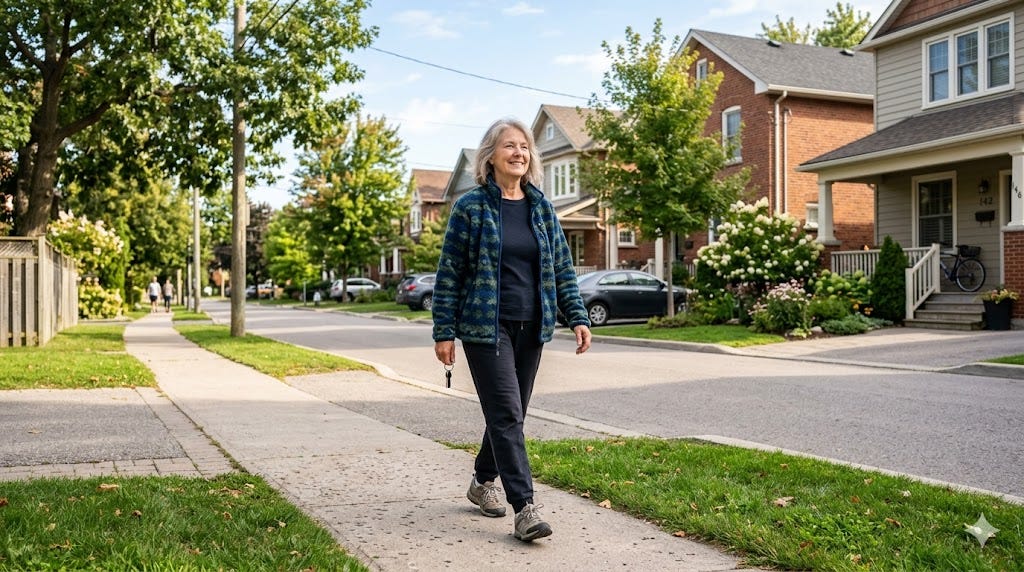
Move after you eat.
A study published in Scientific Reports found that a 10-minute walk immediately after eating significantly lowered blood sugar compared to resting. The walk reduced peak glucose levels and overall blood sugar response [PubMed] https://pubmed.ncbi.nlm.nih.gov/30792257/
Not 30 minutes later. Not an hour after. Immediately.
The 10-minute walk immediately after glucose intake was uniquely effective at reducing peak glucose spikes [PubMed] https://pubmed.ncbi.nlm.nih.gov/18213941/
Here’s what makes this so powerful: Even a five-minute walk after eating had a measurable effect on moderating blood sugar levels, with the beneficial effect observed during a 60- to 90-minute window following the meal [PubMed Central]https://pmc.ncbi.nlm.nih.gov/articles/PMC4451435/
Your muscles act like sponges. When you move right after eating, they pull glucose out of your bloodstream for energy.
No spike. No crash. Just steady, controlled blood sugar.
The Timing Matters
Research comparing walking 30 minutes once daily versus walking 10 minutes after each meal found that post-meal walking was significantly more effective for blood sugar control [PubMed Central]https://pmc.ncbi.nlm.nih.gov/articles/PMC4933124/
It’s not about how long you walk. It’s about when.
After breakfast. After lunch. After dinner.
Ten minutes. That’s it.
Around the block. Up and down the driveway. Through the house if the weather’s bad.
Just move.
Can’t Walk? No Problem.
Living somewhere that gets a lot of rain? Or maybe mobility is an issue?
Studies show that bodyweight exercises immediately after eating - squats, push-ups, lunges, sit-ups - improved blood sugar control just as effectively as walking [PubMed]https://pubmed.ncbi.nlm.nih.gov/40237304/
Stand up and do some gentle Qigong movements. A few stretches. Resistance exercises while holding onto a counter.
The point isn’t the specific movement. The point is activating your muscles when glucose is entering your bloodstream.
Why This Works
For people who walked after meals, changes to blood sugar were not only less extreme, but also occurred more gradually. Sudden blood sugar spikes and drops can raise cardiovascular risk and are believed to play a role in developing Type 2 diabetes [PubMed Central] https://pmc.ncbi.nlm.nih.gov/articles/PMC4451435/
You’re not just lowering your blood sugar in that moment.
You’re protecting your heart. Your blood vessels. Your brain. Your future.
Ten minutes after each meal. That’s the habit.
Simple. Science-backed. Life-changing.
What’s your post-meal routine?
Do you move after eating, or is this something new you’re ready to try?
Tell me. I want to know what works for you - or what’s been holding you back from this simple habit.
Membership in Move Well Stay Healthy for only $8 a month... It includes member articles, classes, meditations, tapping and more to help you thrive!
Very helpful!