Stretching 5 Days a Week Cuts Your Death Risk by 20%. Why Isn't Everyone Doing This?
Stretching Deserves Way More Attention
Everyone talks about running. Walking. Hitting the gym. Lifting weights.
But stretching?
That’s the afterthought. The thing you’re supposed to do but probably skip.
Here’s what the science just proved: You’re skipping the wrong thing.
A study of over 34,000 Korean adults found something remarkable.
People who stretched five or more days per week had a 20% lower risk of dying from any cause compared to those who didn’t stretch at all. And their risk of dying from cardiovascular disease dropped by 25% [PubMed](https://pubmed.ncbi.nlm.nih.gov/35228201/) [WGVU NEWS](https://www.wgvunews.org/season-three-of-straight-talk-on-health/2024-04-01/ep-68-reducing-risk-of-dying-of-cardiovascular-disease) .
Let that sink in.
Stretching. Five days a week. Twenty percent lower risk of death.
Not from running marathons. Not from crushing it in CrossFit. From simple flexibility exercises.
The Study Nobody’s Talking About
Researchers followed these 34,000 people for over a decade, tracking who stretched, who didn’t, and who survived.
The study included participants aged 20-79 from the Korea National Health and Nutrition Examination Survey, with mortality data collected through December 2019 [American Heart Association](https://newsroom.heart.org/news/new-study-finds-lowest-risk-of-death-was-among-adults-who-exercised-150-600-minutesweek) .
What they found changed how we should think about exercise.
When researchers looked at different types of exercise individually, stretching reduced mortality risk by 10%. When combined with aerobic exercise and weight lifting, the risk reduction jumped to 22% [PubMed](https://pubmed.ncbi.nlm.nih.gov/18213941/) .
But here’s what shocked even the scientists: stretching reduced the mortality risk the most when examined as a standalone activity [PubMed](https://pubmed.ncbi.nlm.nih.gov/18213941/) .
More than walking. More than aerobics. More than weightlifting.
Why Does Stretching Work?
Nobody knows for certain yet. But here’s what researchers think might be happening.
Stretching may strengthen blood vessels and connective tissue, potentially decreasing blockages or plaque buildup in arteries. The deep breathing associated with most stretching also contributes to heart and lung health [PubMed](https://pubmed.ncbi.nlm.nih.gov/35228201/) .
There’s more.
Stretching increases strength, helps keep muscles more pliable, may improve arterial function, can reduce resting heart rate, and increases vasodilation [PubMed](https://pubmed.ncbi.nlm.nih.gov/35228201/) .
All of this together? It’s protecting your cardiovascular system. Keeping your body mobile. Maintaining your independence as you age.
What Counts As Stretching
This isn’t just touching your toes in gym class.
Activities like yoga, tai chi, and qigong count as stretching because they feature slow, elaborate movements that control the body while stretching muscles and connective tissue [PubMed](https://pubmed.ncbi.nlm.nih.gov/35228201/) .
This is exactly what I’ve been teaching for years.
Qigong. Resistance stretching. Movement tied to breath.
Not because it looks good on Instagram. Because it works.
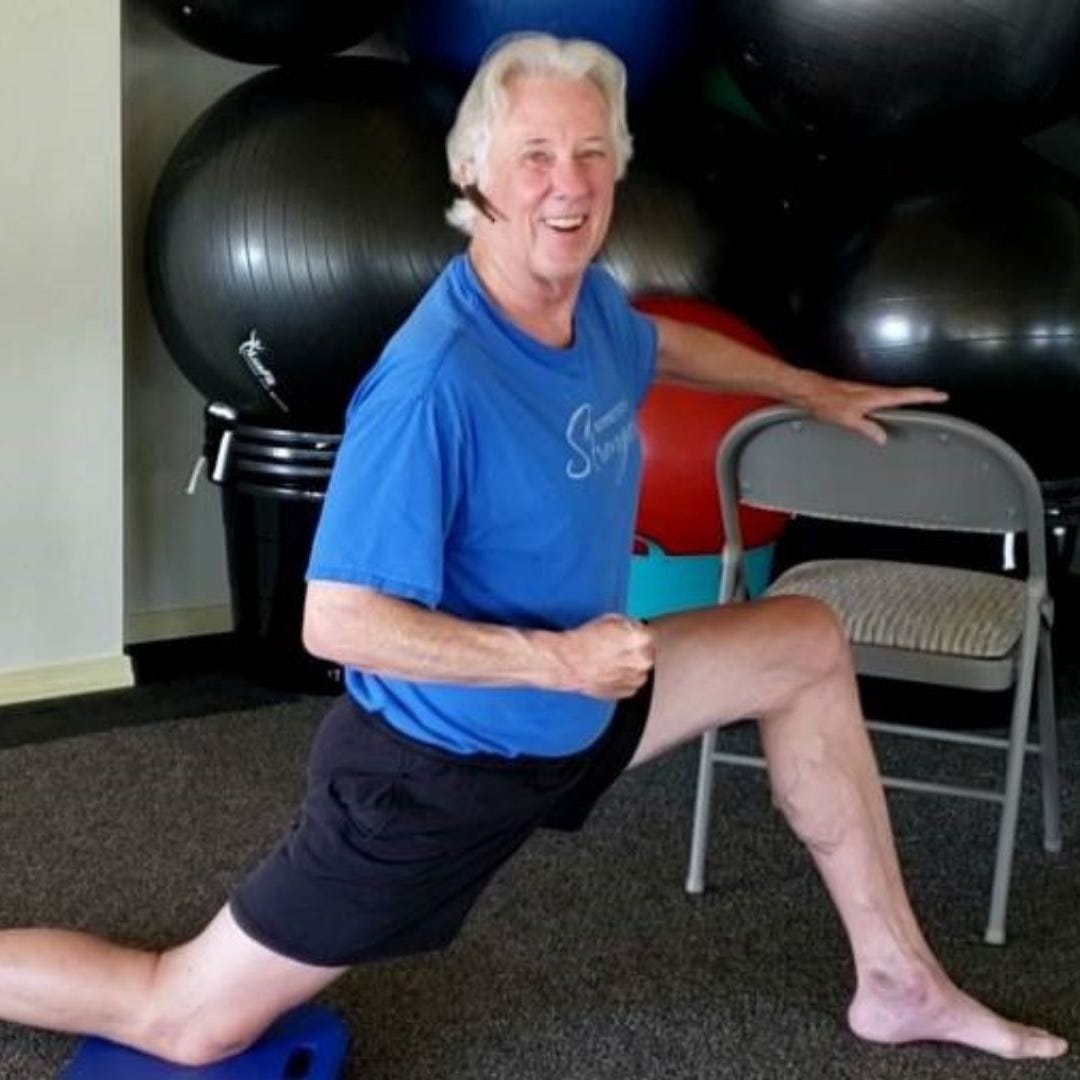
When I discovered resistance stretching back in 2007, it saved me from multiple surgeries. That’s when I learned: Your body responds to what you ask of it.
Ten years ago, I added Qigong. Now at 72, I stretch multiple times throughout the day. Five to ten minutes in the morning while my coffee brews. A full class at 8am. Quick sessions whenever my body needs it.
Simple. Consistent. Life-changing.
The Flexibility-Longevity Connection
Another study tracked over 3,000 middle-aged adults and found something even more striking.
Men and women with low flexibility had a 1.87 and 4.78 times higher risk of dying, respectively, than those with high flexibility [PubMed Central](https://pmc.ncbi.nlm.nih.gov/articles/PMC6527136/) .
Read that again. Women with low flexibility had nearly five times the risk of dying.
Body flexibility is strongly and inversely associated with mortality risk in middle-aged men and women [Harvard T.H. Chan School of Public Health](https://hsph.harvard.edu/news/exercise-variety-not-just-amount-linked-to-lower-risk-of-premature-mortality/) .
Your flexibility isn’t just about reaching your toes. It’s literally a marker of how long you might live.
What This Means For You
You don’t need to run. You don’t need to lift heavy weights. You don’t need expensive gym memberships or complicated programs.
You need to stretch. Regularly. Intentionally.
Five days a week, according to the research. But even starting with three makes a difference.
We teach this. Qigong, resistance stretching, practical movement that protects your body without beating it up.
No flowery language. No mystical nonsense. Just simple techniques that keep you mobile, strong, and independent as you age.
Because here’s the truth they don’t tell you: The thing that feels easiest might be the thing keeping you alive.
Stretching isn’t a warm-up. It isn’t optional. It isn’t something you do after the “real” exercise.
It IS the real exercise.
Your body is designed to move. To bend. To stretch. To stay flexible.
Feed it that movement, and it responds.
Seventeen years ago, I reversed my diabetes by changing how I ate and moved. Ten years ago, I discovered Qigong and resistance stretching became my daily practice.
Now at 72, I’m more flexible than I was at 50. My body feels better. My energy is higher. My mind is clearer.
Not because I’m special. Because I stretch. Every single day.
The Research Is Clear
Stretching five days a week reduces your risk of death by 20%.
It protects your heart. Strengthens your blood vessels. Keeps your muscles pliable. Maintains your mobility.
It’s the easiest form of exercise with some of the biggest benefits.
So why isn’t everyone doing it?
Because we’ve been sold the lie that exercise has to hurt. That you have to sweat and strain and push yourself to exhaustion.
The science says otherwise.
Simple movement. Tied to breath. Done consistently.
That’s the medicine.
What’s Your Experience?
Do you stretch regularly? Have you noticed changes in how your body feels, how you move, how much energy you have?
Or maybe you’ve been skipping it because you thought it didn’t matter.
I want to hear from you. What’s working? What’s holding you back?
Drop a comment below. Let’s talk about what simple movement has done for you - or what you’re ready to start.


Stretch Strong with classes right here on substack for move well stay healthy premium members!
I'm 71 and started yoga at age 45 - began stretch classes with Riverszen about 5 years ago. I had a friend from Laos who passed away a couple years ago and I attended her Buddhist funeral. Part of the service required us to kneel for an extended period of time. When we could stand, I popped right up without thinking. My friend's daughters who were in their 40's and 50's asked "Can you help me up." After we were all standing, one of the daughters turned to the other and said, "We just had an old lady help us up." Thank you daily stretching for keeping me strong and independent.