
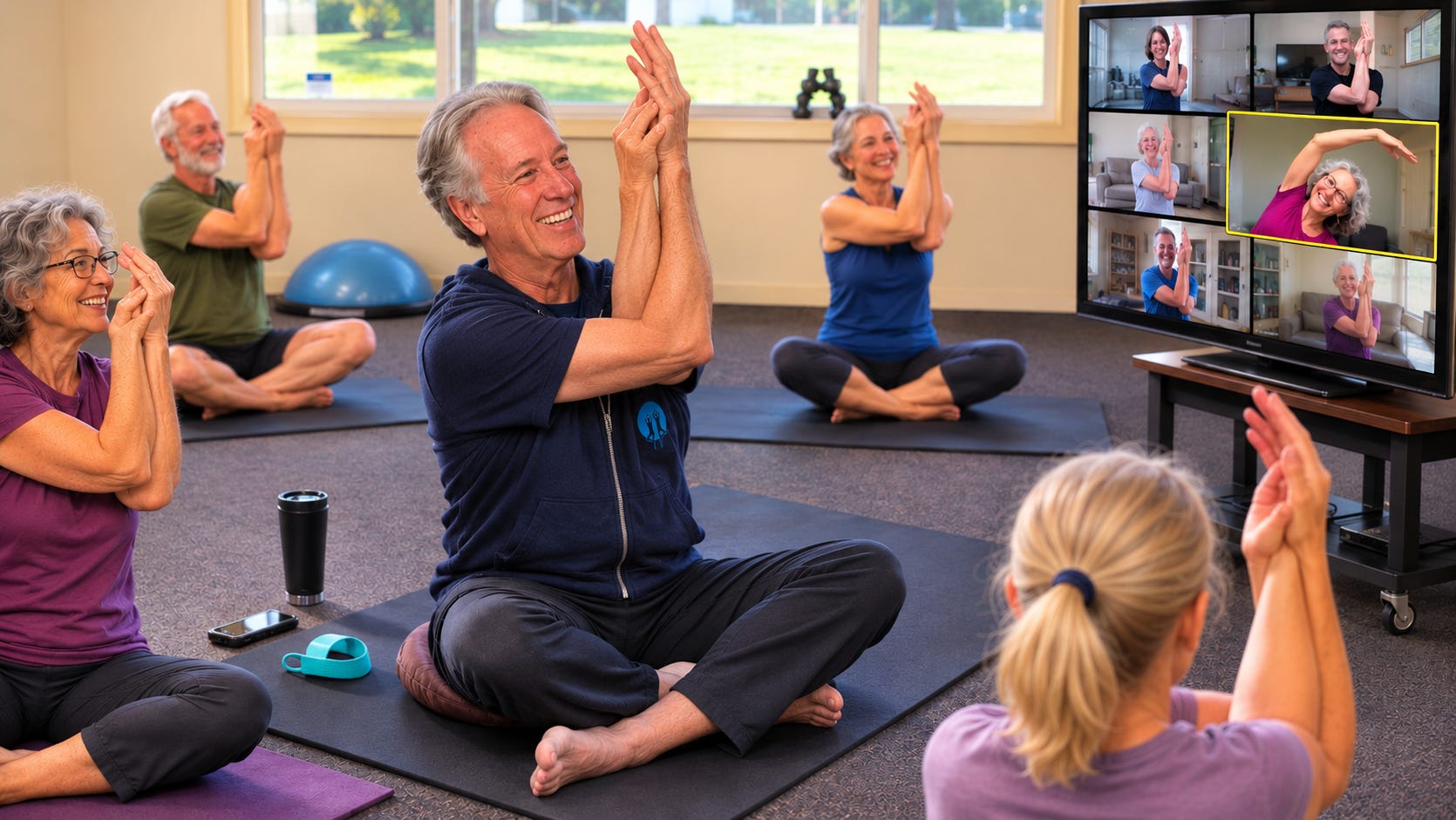
I was teaching class this morning when I noticed Jane doing something I wasn’t doing.
She was doing a movement I’d skipped earlier in the routine from my usual sequence.
Now, I suppose some teachers might have wanted her to get back in step with everyone else.
Not me.
“Sorry Jane. I love that. I skip something one day and you go ahead and do it.”
And I meant it.
Sometimes I shorten a routine because we’re running a little long. Sometimes I leave something out. But if there’s a movement somebody needs and I happen to skip it, I want them to do it anyway.
They can catch up with me later. I’m not moving that fast.
What I loved about Jane’s little detour was that she wasn’t waiting for me to tell her what to do. She knew what she wanted to work on, and she did it.
That’s a pretty good place for a student to get to.
I’ve spent a lot of years teaching people how to move. And one of the things I’ve learned is that I don’t want everybody moving exactly like me.
For one thing, we’ve all got different bodies. Different injuries, different strengths, different things that need attention. And those things can change from one day to the next.
Later in the same class, we were doing quadriceps stretches. I gave everyone two choices.
They could hold the muscles under contraction in one position, or they could move back and forth against resistance.
Both approaches can be useful. Some people prefer one, some the other. Sometimes the same person might choose differently on another day.
I told the class, “Everybody doing what works best for their own body. One prescription doesn’t work for everybody.”
I’ve become pretty convinced of that over the years.
And it doesn’t just apply to stretching.
Think about how much advice we get telling us there’s one right way to do something. One perfect diet. One exercise routine. One way to sleep, work, learn, or organize our lives.
Some of that advice may be excellent.
But excellent advice for one person doesn’t automatically make it excellent advice for everybody.
Peggy and I have spent years experimenting with different approaches. Some worked beautifully. Others, not so much. And occasionally something we were absolutely convinced would work turned out to be a lousy idea.
Of course, you have to learn enough to make intelligent choices. There’s a difference between making a thoughtful adjustment and simply doing whatever happens to feel easiest.
But eventually, I’d like our students to become comfortable making those choices for themselves.
And sometimes they get there before I even finish teaching the class.
Which brings me back to Jane.
There I was, leading everyone through the routine, and she quietly decided there was something else she wanted to do first.
I loved it.
I just hope she doesn’t get too good at this. I might find myself standing at the front of the room with nobody following me.