Resistance Stretching: The Simple Move That's Changed How We Age Gracefully
We’ve been sharing resistance stretching in our classes every single day since 2007. Back then, it felt like a quiet revolution—moving away from passive, “just hold it and hope” stretches toward something active, intelligent, and kind to the body.
The core idea is straightforward: instead of relaxing into a stretch and letting gravity do the work (which can sometimes create more tension over time), you gently contract the very muscle you’re lengthening while slowly extending it. That active resistance wakes up your fascia—the web of connective tissue that surrounds every muscle—and helps you gain real, lasting flexibility paired with strength. No forcing, no bouncing, no pain. Just controlled, thoughtful movement.
Why does this matter as we get older? Tight hamstrings are one of the most common complaints we hear. They pull on your lower back, limit your stride when walking, make sitting (or getting up) feel stiff, and can even contribute to that “creaky” feeling in the hips and knees. Resistance stretching addresses the root: it teaches the nervous system that length + strength can coexist, so your body feels safer opening up.
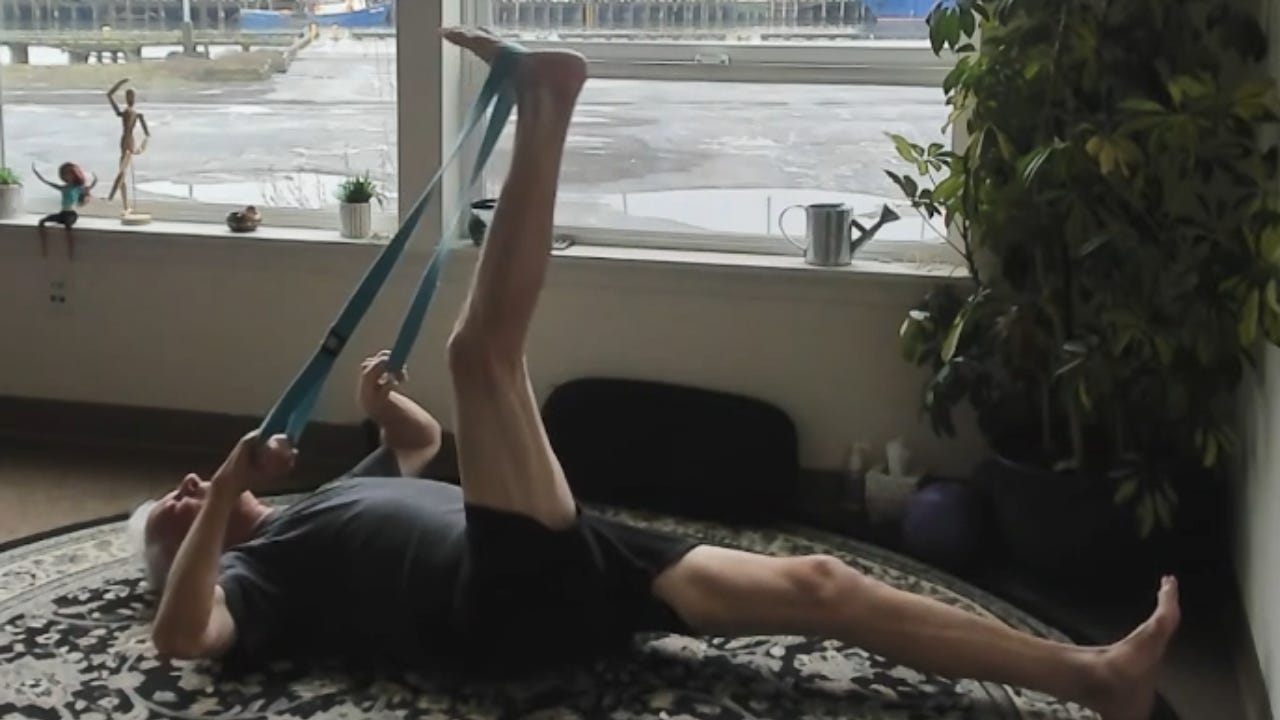
Our go-to daily demo is the supine hamstring resistance stretch with a long strap. It’s accessible, floor-based, and works beautifully whether you’re 40 or 80.
How to do it (step by step):
Lie on your back on a mat or carpet, knees bent, feet flat.
Loop a long yoga strap, belt, or even a towel around the arch of one foot. Hold the ends comfortably with both hands (arms straight or slightly bent—whatever feels natural).
Start with the knee bent and leg lifted a bit off the floor.
Now the magic: press your heel firmly down into the strap as if you’re trying to straighten your knee against resistance (this contracts the hamstring).
While maintaining that gentle press, slowly straighten/extend your leg upward toward the ceiling—resist the whole way, like you’re pushing the strap away.
Go only as far as you can keep the contraction without your back arching or the movement becoming jerky.
Slowly return to the bent-knee start position while still resisting.
Repeat 6–10 times per leg, breathing steadily. Switch sides.
You should feel a deep, satisfying “working” sensation in the hamstring—not sharp pain. If it pinches or strains, back off a little; the resistance is what protects you.
We love this one because:
It builds strength in the lengthened position (huge for stability as we age).
It improves posture by releasing chronic tightness without aggressive pulling.
It pairs perfectly with your intermittent fasting mornings—do it after your coffee and water ritual, before breaking the fast.
It’s low-equipment and home-friendly. No gym required.
In our classes, we’ve seen folks go from “I can’t touch my toes anymore” to moving with noticeably more ease in just a few consistent weeks. One participant in her 70s told us it made gardening feel joyful again instead of punishing.
Give it a try this week, maybe right after your next morning walk or movement session. Start small, listen to your body, and notice how your legs and back feel afterward.
If you’ve been doing resistance stretching with us for years, or if this is new to you, we’d love to hear how it lands. Drop a comment below: What’s your favorite resistance move, or how has it helped you move better?
Keep moving well, stay healthy.
One gentle contraction at a time. 💪🌿

