
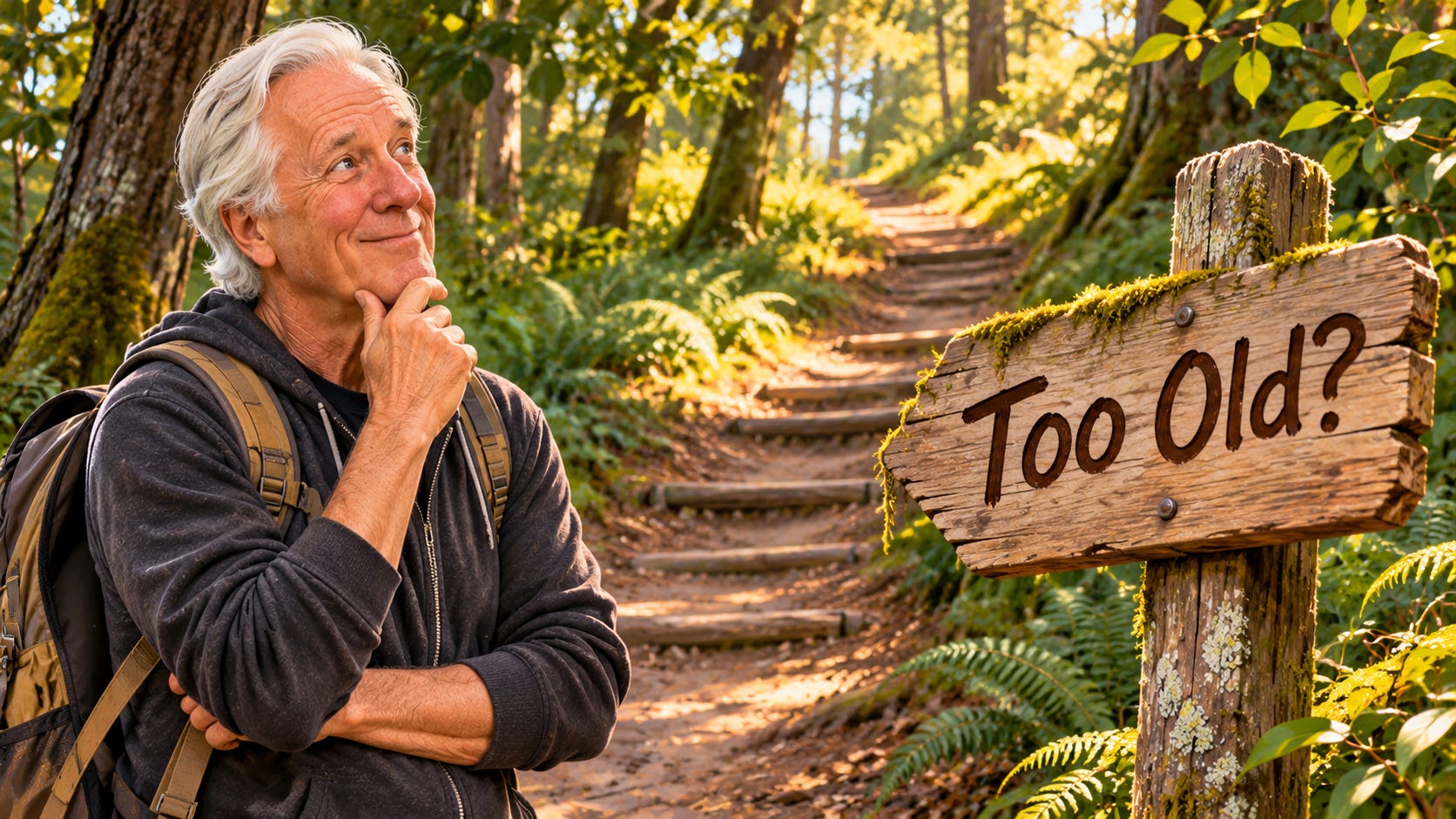
There’s a phrase I’ve heard more times than I can count.
“Well, that’s just part of getting older.”
Sometimes it is.
But sometimes I wonder how many things we’ve stopped trying to improve because somebody convinced us that getting older was the explanation.
Your knees hurt? You’re getting old.
Your balance isn’t what it used to be? You’re getting old.
You can’t get down on the floor anymore? What do you expect at your age?
It’s a remarkably convenient explanation. And once you accept it, there’s not much reason to look any further.
Then I came across a study that made me think about that phrase a little differently.
Seven and a half years
Back in 1975, researchers asked 660 adults aged 50 and older how they felt about getting older.
Some saw aging as a time of continued growth and possibility. Others had a much more negative view.
The researchers followed them for more than two decades.
Here’s the interesting part.
The people with more positive views of aging lived a median of about 7.5 years longer than those with negative views.
Seven and a half years!
Now, that doesn’t mean you can add seven years to your life by standing in front of a mirror every morning and telling yourself how wonderful getting older is.
I suspect the mirror would get tired of listening.
The study found a connection, not proof that attitude alone caused the difference.
But it raises a question I’ve been thinking about for years.
What happens when we believe we’re finished?
Peggy and I have worked with people who were convinced certain things were no longer possible for them.
Sometimes they were right. Bodies change. Injuries happen. Diseases happen. Not everything can be fixed.
But sometimes, when we began exploring different ways to move, they discovered abilities they hadn’t used in years.
And I’ve wondered how many people never make those discoveries because they’ve already accepted the verdict.
“I’m too old.”
Three little words that can end an experiment before it begins.
I don’t believe we can think ourselves out of every physical problem. But I do believe what we think influences what we’re willing to try.
And what we’re willing to try can influence how we live.
I’m still curious
Getting older is real. So are the changes that come with it.
But I don’t see much value in blaming every ache, every limitation, and every difficulty on the number of birthdays we’ve celebrated.
I’d rather ask another question.
“Is there something we can do about it?”
Sometimes the answer will be no.
Sometimes it might be yes.
And sometimes we’ll discover something neither of us expected.
I think I’d rather spend my remaining years asking questions than accepting answers nobody bothered to test.
The 7.5 years study is striking. And your point is right, it's not about positive thinking, it's about what you're willing to try.