
Years ago, one of our RiversZen students used to eat Campbell’s Healthy Request soup several times a week for lunch.
Why?
Pretty reasonable answer.
She thought it was healthy.
It said Healthy Request right on the can. Some varieties carried the American Heart Association’s Heart-Check mark.
What else was she supposed to think?
Then she started coming to RiversZen.
One of the things Peggy and I have encouraged people to do for years is ridiculously simple:
Turn the package around.
Read what’s actually in it.
Our student started doing that.
Eventually she stopped buying the soup and began making her own in a crockpot.
Her explanation was even simpler:
“I know exactly what’s in it.”
I love that.
Not because canned soup is evil.
Not because everybody needs to make soup from scratch.
Because she stopped letting the front of the package make the decision for her.
What Does That Heart Actually Mean?
This sent me down a rabbit hole recently.
The American Heart Association has a program called Heart-Check.
Food manufacturers can submit products for certification. Products have to meet nutritional requirements established for their particular food category.
Here’s the part I didn’t know.
Companies also pay for the certification.
The AHA’s own program guide lays out an annual fee structure based on the size of the company and the number of product licenses.
For example, under the published fee schedule, a medium-sized company seeking up to ten licenses would pay $4,000 per license annually.
That doesn’t mean somebody hands over $4,000 and gets to slap a heart on a box of anything they want.
Products still have to qualify.
The AHA says those fees pay for reviewing, testing, certifying and operating the program.
Fair enough.
But as a consumer, I still think it’s useful to know how the system works.
A symbol on a package isn’t magic.
“Healthy” Depends on the Question
Campbell’s Healthy Request soup provides a good example.
Some varieties were certified through the Heart-Check program while containing around 410 mg of sodium per serving.
That led to lawsuits years ago questioning whether the Heart-Check symbol and “Healthy Request” language could mislead consumers.
The AHA’s response was essentially that Heart-Check wasn’t a low-sodium certification. Products were evaluated using a broader set of criteria and the soups met the program’s requirements.
And that’s where this gets more interesting to me.
Both things can be true.
A product can meet the requirements of a certification program.
And it still may not be the food you want to eat.
That’s why I don’t want a logo making the decision for me.
I Used to Make This Much More Complicated
Nineteen years ago, when I changed how I ate, I wasn’t trying to become an expert in food certifications.
I was trying to get healthier.
I had type 2 diabetes and weighed nearly 100 pounds more than I do today.
Over time I found that I did much better when I stopped worrying so much about whether something was marketed as healthy and started eating mostly actual food.
My diet has continued to evolve since then.
Today I’d describe myself as carnivore-ish.
Peggy is pescatarian.
So apparently there is more than one road out of the grocery store. 😂
What we have in common matters more to me.
We both eat mostly whole foods.
Very little ultra-processed stuff.
And we pay attention to how what we eat affects us.
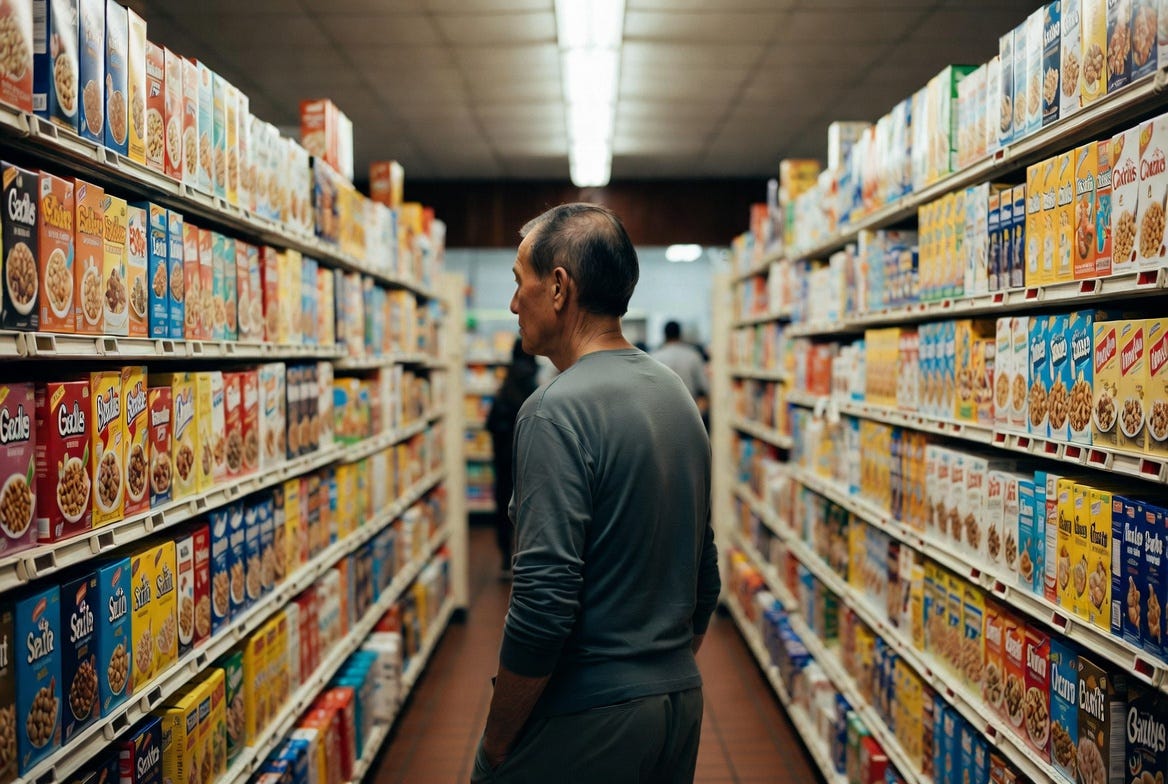
Turn the Package Around
I’m not suggesting you stand in the grocery store conducting a federal investigation into every box of crackers.
Good grief. We’d never get home.
I’m suggesting something much simpler.
Be curious.
“Heart healthy.”
“Natural.”
“High protein.”
“Low fat.”
“Made with whole grains.”
Whatever is printed in giant friendly letters on the front, turn the package around and see what’s actually in the food.
Then decide whether it belongs in your life.
Sometimes the answer will be yes.
Convenience matters. Enjoyment matters. Nobody needs to achieve nutritional sainthood before lunch.
But make the decision yourself.
That’s what our student did.
She didn’t need somebody to tell her Campbell’s soup was bad.
She learned to look.
Then she decided she’d rather make her own.
I think that’s a much more useful health skill than memorizing which little symbol you’re supposed to trust this year.
Read the label. Eat mostly real food. Pay attention to your body.
And then get on with your life.
There’s more to living well than standing in aisle seven arguing with a soup can.
I was one of the people who used to buy Campbells Healthy Request Soups and have that for lunch several times a week thinking it was healthy. I stopped 5 years ago after joining Riverszen and being encouraged by Dave and Peggy to read labels. I now make my own soup in a crockpot and I know exactly what's in it!